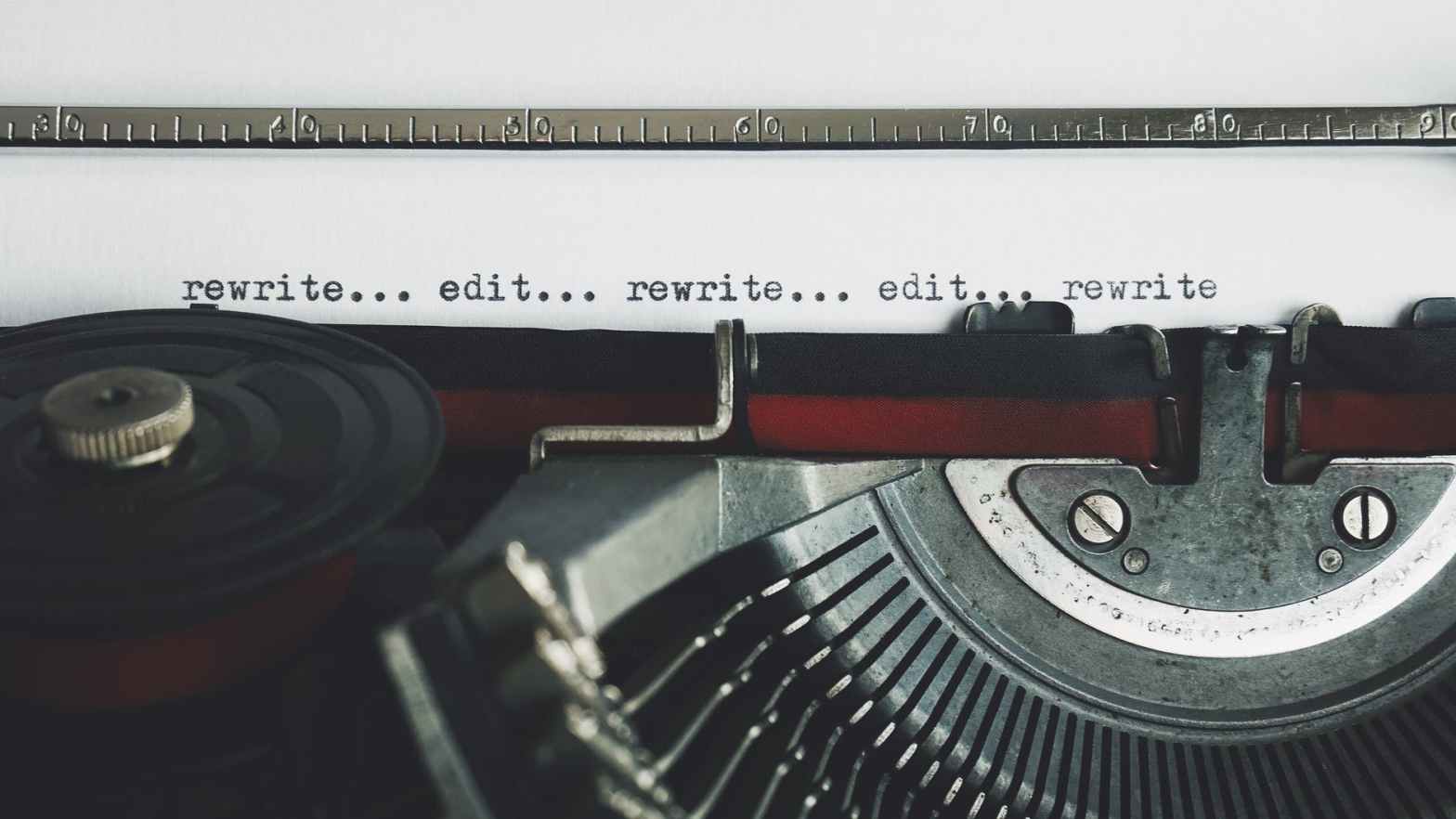
Self-editing pertains to the method of examining and evaluating your own written output after finishing its draft. This task is common for authors who opt to self-publish or who want to have clean drafts of their works before handing them over to their publishers. Personally examining your work will let you discover its flaws — such as grammatical errors, typos, spelling mistakes, redundancy, etc. — and correct them before it is too late. The problem with completing the first draft of every literary text is its rawness. There are things that need to be polished and improved. Everything takes time to progress, like fruits and humans, they take a while to ripen and grow. This goes the same way to self-editing, you adjust your focus to see the bigger picture.
In the realm of literature, every great story does not just live to the hearts of the readers because of its underlying message. It creates a massive impact on its audience also because of how it is written. The syntax, grammar, literary devices, and other technical aspects in writing are properly utilized. Therefore, a writer that opt to self-edit must take time to trim his or her work. If there are things that are unnecessary and unsuitable, they must be edited, revised, or even deleted for the greater good. No matter what genre an author decides to write about it can mark on the reader’s hearts as long as the overall aspects of a story is well-seasoned.
There are numerous authors that write about self-editing — like author Collete Jackson Fink in her blog post Self-Editing Fantasy Fiction. Most of them document their self-editing journey, while some lay down tips in self-editing. Although getting a professional editor is a good option, trusting your writing and editing skills has its advantages and disadvantages too. That said, here are the pros and cons of self-editing:
Self-editing Pros
- Saves money
Authors that prefer to proofread their own work tend to save a lot of financial resources. It is advantageous for these writers because if they are self-publishing or they have been taken under the wing of a publishing company, they can manage their funds better. Money is always essential to every business. It is like the fuel to the fire. There will be no printed books if there is no money invested on it. Although electronic books are trendy, being published is still a dream come true for every author. Thus, self-editing a manuscript or draft is a good way to save resources.
- Authors will get more creative freedom
The time and effort that an author spend writing is incomparable. The innate talent of playing with words and turning them into a wonderful story is the best asset a writer could take pride. Thus, an author editing his or her own work can evaluate what needs to be added or subtracted for the betterment of the literary work. It is convenient to the end of the writer because he has the creative freedom to summon more creative juices and apply them to the text.
- Makes authors get more acquainted with their works
Proofreading requires reading and understanding. Examining a written work inside out makes an author get more familiar with it. Although they are the ones who gave meaning and life to the story, there are things that they have accidentally overlooked while writing. In self-editing, an author may meet and discover things — good or bad, in his or her work that needs immediate editing.
- Gives the opportunity to better the text’s organization
Editing gives you a better view of your work. You will not be left focusing on one corner of the manuscript, instead you will be looking at all corners and edges. This is a chance to improve the overall organization of the text. You can pinpoint and correct the errors in typography, grammar, spelling, subject-verb agreement, and sentence structure. If you are evaluating the primary draft, expect that there will be countless of drafts that will follow. It is because the more you edit the work, the more errors that you will notice. It is a good chance to produce a well-developed and cleaner piece.
- Provides the chance to edit along the way
There are no expiry period or end of contract in self-editing. You are free to proofread your work as long as you want, making it beneficial for your output. It is because there might be new ideas that will pop in your mind that may be suitable to your literary work; thus, you can add them to your story and improve the plot.
Self-editing Cons
- Can be time-consuming
You are not disbursing money, what you are spending is effort. Proofreading may extract too much of your time and energy, especially if it is a lengthy draft. The time and effort that you have given to editing can be allocated to other things that can make your day more productive — such as cleaning, exercising, meeting with friends, going out, etc.
- Authors get awfully familiar with their works
Sometimes too much is toxic. Everything that gets a little too much becomes tiresome to handle. An author editing his or her own work for hours in a day has a tendency to neglect some parts that needs improvement. It is because they get too confident that they already familiarized their work from top to bottom. They get awfully acquainted to their outputs where they, sometimes, put their trust to their instincts and confidence that everything is already put in a package.
- Prone to procrastination
Polishing and evaluating your own work in the comfort of your house or favorite places everyday can sometimes becomes dreary. Also, it can most likely ignite procrastination because there is no boss to give you deadlines and no schedule to follow. You have the freedom to do the proofreading whenever and wherever you want. So, it is definitely a subject to procrastination. The thought of doing it later — until later becomes tomorrow and tomorrow becomes never, will probably constantly come into mind.
Proofreading your own work for the purpose of improving it before publishing or submitting to your editor may demand too much effort. However, the struggles are nothing compared to the fruits of the labor. It gives pride and acknowledgement that, as a writer, you are not sending a crappy and raw manuscript instead you are handing a publishing-worthy and easier to check draft.
 The Happy Hammock