Five Tips on How to Cope up With Stress during This Times of Crisis

The world is in chaos. There have been a lot of lives that were lost and are currently at stake. Cities are deserted, business are closed, people are being quarantined, and government funds are gradually diminishing. The present health crisis has filled each person’s plate with worries, anxieties, and fears. Plenty of nations in various continents in the globe have been affected by the novel coronavirus disease and are presently struggling for their people and economy to survive.

As the health crisis began to escalate, terrible news also emerged. The optimistic mindset of people are slowly being consumed by negativity for the updates from different media networks are all about the COVID-19 outbreak, new cases, increasing mortality, and more. In both print and digital platforms, saddening articles are being disseminated. There are nothing wrong about that for it is one way to make people informed about the current situation that they are experiencing. However, there are others that cannot take all the awful information and, as a result, are going through a lot of stress.

Mental health is also important like physical health. In this trying times where everyone’s is at stake, do not forget to also take good care of your mental health for it can affect a lot of things, such as your mindset, perspectives, and more. That said, to conquer stress in the middle of this health crisis, here are some tips that you should check out:

Avoid the Stressors

One of the main method to prevent yourself from being stressed is to avoid your stressors. There are four types of stress according to Albrecht, which are the time stress, situational stress, anticipatory stress, and encounter stress. Moreover, these things that make you frustrated can be the little ones, such as the noise, the presence of someone you like less, the amount of chores you need to accomplish, and more. On the other hand, it can also be the major things, like death, loss, containment, abuse, too much work, etc. You can evaluate your daily routine or keep journals so you can trace and pinpoint the events or things that make you frustrated and, from that, you can start to avoid them and make your days better.

Don’t Spend too much Time on Social Media

Social media is a messy place as of the moment. The diversity of each social media platform suddenly disappeared due to the novel coronavirus disease. Facebook, Instagram, Twitter, and more have turned out to be news outlets that distributes daily updates about the transmission, development, and cases of COVID-19. Instead of laughing about the memes that you happened to stumble upon these platforms, you end up having an anxiety attack or a heavy heart because of the terrible articles, headlines, and news updates about COVID-19. That said, divide your time properly or fully break free from social media so that you can breathe and go on with your daily routine without too much worries.

Divert Your Attention

The attention you spend on browsing the internet and watching the news can be diverted to other things that can make your day more productive. Getting news updates, however, is not being discourage it is just that be reminded not to constantly check news from various sources in order not to get overwhelmed by the rising cases and death due to COVID-19. That said, begin looking for activities that can exercise both your mind and body. You can do indoor sports, stream movies, watch TV shows, dance to your favorite music, sing a song or two, bake cupcakes, and more. These activities can make you busy, occupy your mind, and draw you away from all the negativities.

Connect With your Friends and Family

This is the best time to reconnect with your family, friends and other loved ones. Almost everyone is stuck on their home along with their families. Thus, being on quarantine is not a horrible things now, isn’t it? You can make the most of this situation by doing things that your family used to do or enjoy doing, like watching TV together, playing video games, cooking meals, praying to God, and even eating together. Communicating with friends through chat, text messages, video call, or phone call can also be done. You still can make your peers feel that all of you are in this tough times together even though you cannot hang out physically. Thus, quarantine is not a bad thing after all for it gives the chance to connect and communicate with the people that are close to your heart.

Make Time for Yourself

You have all the time to be productive, bond with your loved ones, and enjoy the little things in life during this quarantine period. One thing that you should not forget to do this time is to take care of yourself. Do not put too much pressure on being a good family or society member, keep the tension out by knowing that you are enough and all that you do is slowly making a difference in the community — like staying at home. You can pamper yourself by doing your skin care routine, working out, or hearing self-development podcasts. Moreover, you can also read some self-help books to help you lessen the stress. There are various self-development books in the corner of literature that will definitely aid you to solve the land mines of life and become a better person.


Three Shelf-worthy Classic Adventure Books You Should Check Out This Spring

Adventure is of the literary genre that is under the scope of fantasy and is being patronized by many. The context of each story, as well as the magic that it offers, is one of the ingredients that makes this category a hit. There is just something more than the ordinary that adventure books can offer, such as going to a wizarding school instead of a normal high school, travelling to an imaginary world rather than to another country, and possessing an extraordinary ability instead of being a normal person.

Throughout the history of literature, adventure novels are always one of the kings. Regardless of what literary period it is, there is nothing more ecstatic than reading a books filled with wonderful characters, magical worlds, supernatural abilities, and unpredictable plots. Readers of all-ages are definitely drawn into this genre, some are die-hard fans while others have other favorite genres too.

There are various books and authors of this genre that have existed or are currently showcasing their greatness. Examples of these excellent works and authors are the quest and adventure books of Anita Fisk, the dystopian trilogy of Veronica Roth, the Harry Potter series of J.K Rowling, and more. However, the aforementioned belong to the contemporary or modern era of literature. There are also other masters of this genre back in the day. If you happen to be one of those who patronizes classic adventure books and want to make your spring break worthwhile, then this article is perfect for you! Listed below are five notable classic adventure novels that were written by five great authors in different eras of literature.

Gulliver’s Travel

Gulliver’s Travel is originally titled as Travels into Several Remote Nations of the World. In Four Parts. By Lemuel Gulliver, First a Surgeon, and then a Captain of Several Ships, which is a satirical prose. It was written by Jonathan Swift and was published 293 years ago, in the 28th of October 1726. This book was a product of Swift’s intellectual mind with the purpose of annoying the world instead of diverting it. The book centers on the trips of Lemuel Gulliver and his life prior to his journey.

Gulliver’s first travel was dated from 4th of May 1699 to 13th of April 1702 in which he found himself a prisoner in Lilliput, a country with residents that are small people measuring 15 centimeters tall after surviving a shipwreck. He gave assurance to the people that he is not dangerous; thus, he became a citizen of the country and was even the apple of the Lilliput Royal Court’s eyes. The first voyage had its twists and turns. Moreover, it ended with Gulliver being charged for treason and other crimes, like pissing in the metropolitan — but what he intended for the act was to put a fire off. Gulliver was convicted and was ordered to be blinded. Furthermore, Gulliver had other travel histories that followed which were called A voyage to Brobdingnag, A voyage to Laputa, Balnibarbi, Luggnagg, Glubbdubrib and Japan, and A Voyage to the Land of the Houyhnhnms.

Adventures of Huckleberry Finn

The Adventures of Huckleberry Finn is written by one of the great pillars of literature, which is Samuel Langhorne Clemmens or most widely known in his pen name Mark Twain. This book is the second satirical book that he authored next to the The Adventures of Tom Sawyer. It was first released in United Kingdom in December of 1884 and have reached the US in February of 1885. This novel was published by Chatto & Windus or Charles L. Webster And Company.

The story revolves around the adventures of a boy that is in between thirteen or fourteen years old named Huckleberry Fin, also known as Huck. He was raised by his father who is an alcoholic. One of Huck’s struggle is fitting in the society. The story is set in a fictional place called St. Petersburg, Missouri, which is found along the shore of the Mississippi River. Huck is friends with Tom Sawyer, the two boys had a good amount of money as an outcome of their past journeys. Huck narrated the story and elaborated how he was taken under the wing of the Widow Douglas and how the widow and her sister tried to civilized and taught him religion. He did not like being civilized for he found it constraining. Thus, Tom helped him get away and the true adventures of Huck finally began.

The Call of the Wild

The Call of the Wild is a brief adventure book authored by Jack London. It was first published in 1903 by Macmillan. The book illustrators are Philip R. Goodwin and Charles Livingston Bull while the cover artist is Charles Edward Hooper. This tale is set during the Klondike Gold Rush in the 1890s in Yukon, Canada. It immediately became a hit from the moment it was released even until the present times.

The main character of the story is the dog called Buck and that is whom the story centers on. The books started when Buck was abducted in the ranch of his home at Santa Clara Valley, California and was sold to become a sled dog in a place in Alaska. As the story developed, Buck became gradually wild given the rough environment that he is currently in. He was forced to combat in order to survive and become dominant. At the end of the story, Buck began to shed the cover of civilization started to become dependent on the primal instinct and experience to rise as a king in the wild.

Getting to Know Some of the Inspiring Authors in Christian Literature

Christianity is amongst the various religions in the world. In fact, based on the demographic analysis of the Pew Research Center, Christianity maintained its title as the biggest religious group all around the globe in the year 2015. It composes about 31 percent of the 7.3 billion residents in the world. As the number of Christians increases, the thirst for spiritual maturity and understanding also heightens. People tend to look for their own measures to find their way to be closer to God. Some opt for bible sharing while others go for reading.

There are various books about spirituality and Christianity present in literature. These books belong to Christian literature, which is the avenue of literature that focuses on God and Christianity. These works can be both in fiction and nonfiction and are promoting the word of the Lord or something that is related to Christianity. The themes can also tackle about finding someone’s purpose in life through the guidance of the Divine being, living a better life by walking through faith, and more. So, if you are one of the die-hard fans of Christian literature, here are five remarkable authors you might want to check out!

David Murdoch

David Murdoch is a Christian book author who have read and examined the Holy Scripture almost all of his life. In the early 70s, he became a pastor in Baytown, Texas where he started giving advice and guidance to his constituents. Murdoch stated that most of the challenges in the lives of the people happen as a consequence of lack of Bible knowledge. When David found out that the irreplaceable languages were accessible to everyone that are utilizing the original Strong’s Concordance, the Holy Scripture turned out to be much more significant in responding to the uncertainties of life. He also discovered that numerous beliefs carried out by various Catholic churches were referred from the traditions of people rather than the Bible for the Holy Scripture was originally in English. Murdoch strongly believes that if people delights God, He is morally obliged to bless His people.

Lee Strobel

Lee Strobel was born on January 25, 1952 in Arlington Heights, Illinois. He is a notable author in Christian literature more than three books entitled The Case for Christ, The Case for Faith, The Case for a Creator, and more. Four of his book have already been recognized as the ECPA Christian Book Awards. Most of his writings fall in the Christology and Historicity of the Gospels categories with the subject of Christian apologetics. In the years 1987 to 2000, he became a teaching pastor at Willow Creek Community Church in South Barrington, Illinois. Aside from being an author and after he became a pastor, he was once an investigative journalist and have hosted a TV show called Faith Under Fire. He also participated in various interviews from different television networks, such as CNN, Fox News, and more.

Marilynne Robinson

Marilynne Robinson was born on November 26, 1943 in Sandpoint, Idaho as Marilynne Summers. She is a remarkable author and essayist. Robinson has a successful writing career. She has received various awards back in the days, such as Pulitzer Prize for Fiction in 2005, Library of Congress Prize for American Fiction in 2016, and National Humanities Medal in 2005. She even made it to the top 100 most influential people list of Time’s magazine in 2016. One of her popular book was Gilead, which was recognized as the Pulitzer Prize for Fiction in 2005 and the National Book Critics Circle Awardee. Gilead is a fiction book that focuses on rural life and faith, it is also considered as an epistolary book. Robinson also wrote impressive essays, such as Humanism, Science, and the Radical Expansion of the Possible, Fear, Which Way to the City on a Hill?, and more.

Beth Moore

Beth Moore is a prominent Christian book author with more than eight published books, such as When Godly People Do Ungodly Things, Believing God, Get Out of That Pit: Straight Talk about God’s Deliverance, etc. She was born in Green Bay, Wisconsin as Wanda Elizabeth Green, but was raised in Arkadelphia, Arkansas. Apart from being an author, she also became a Bible teacher and an evangelist. Furthermore, she also have written and created various video resources appertaining to the Bible studies that she performs at the Houston’s First Baptist Church and Living Proof Live symposia. Moore have founded the Living Proof Ministries, which is a Bible-based group intended for helping women who want to center their lives on Evangelicalism principles that is located in Houston, Texas.

Richard J. Foster

Richard J. Foster was born in New Mexico on 1942. He is an author and a Christian theologian. Foster acquired his bachelor’s degree from George Fox University in Newberg, Oregon and his doctor’s degree in pastoral theology from Fuller Theological Seminary in Pasadena, California. Besides being a writer and theologian, he also taught in Friends University and became a pastor at Evangelical Friends churches. He was prominently known for his book called Celebration of Discipline: The Path to Spiritual Growth that was published in 1978. The said book evaluated the intrinsic disciplines of study, prayer, meditation, and fasting in the life of the Christians, as well as the extrinsic disciplines of solitude, service, simplicity, and surrendering. Confession, guidance, celebration, and worship were also tackled by Foster’s remarkable book.

Three Heartening Books About God That You Should Never Miss Reading

Life is difficult to comprehend, that is why people tend to look for means to get by and not get astray. Some go for methods to make most of their lives by going on different adventures, while others fulfill their souls through reading self-help, faith, and Christian books. There is a good number of authors who write about God, Christianity, faith, and religion in general. Thus, resulting to the emergence of various literary works about God. The purpose of these books is to help people find the right path by guiding them through the process. Also, they give aid to people who feel lost, wary, and helpless.

Most of these books appear in both fiction and non-fiction genre, and there is nothing wrong with that. In fact, it is advantageous because readers have different tastes of books. Some prefer to read fiction to ignite their imagination, while others opt for non-fiction to feel the realness of each word. Regardless of what genre, books about God are widely dug out by readers of all ages. So, if you are one of those who are into these books, then this article is perfect for you! Listed below are the must-read books about God you should never miss checking out:

The Shack

The Shack is a fictional novel authored by William P. Young. It was published by Windblown Media, FaithWords, and Hodder & Stoughton. The first publication of the book took place on May of 2007. It crawled its way to the USA Today bestselling list; thus, it was recognized as a USA Today bestseller. The book has sold one million copies a year and a month after its first publication. In 2009, The Shack became a recipient of the “Diamond Award” for selling more than 10,000,000 copies through the Evangelical Christian Publishers Association.

The novel centers on Mackenzie Allen Phillips, who is a father of 5 children. Mackenzie decided to go for a camping with 3 of his kids at Wallowa Lake, which is close to Joseph, Oregon. The trip was fine until his son nearly drowned from canoeing and when came back after saving his son, he noticed that his youngest daughter is gone without a trace. They discovered that Missy was kidnapped and killed by a serial killer. The sudden unfortunate event turned Mack’s life upside down. He, then, got a letter form a person named “Papa” saying that he would like meet Mack at the shack. Mack went to the shack and saw three people, whom they believed was the Trinity. He met God the Father, Jesus, and the Holy Spirit represented by an African-American woman, Middle Eastern carpenter, and an Asian woman respectively. After their meet-up, everything came to light.

Apostasy Can Lead a Nation to Self-Destruct: Will America Mend its Ways and Return to God?

The Apostasy Can Lead a Nation to Self-Destruct: Will America Mend its Ways and Return to God? is written by Philip Wittig. It has two editions; the old edition was published last 21st of April 2017 by the Westbow Press while the second edition was published by ReadersMagnet LLC last July 17, 2019. There are a lot of positive reviews about the book. All of these reviews can be found online — in US Book Review, Foreword Clarion Book Review, and Blueink Review for example, and in the author’s book blog.

The book is narrated in a first person point of view. It revolves around the ancient Israel and America’s methods of advancing from the devotion and sanctification to the Divine being of the said countries and their people. Thus, the book sketches a biblical and historical bond between the two countries mentioned. In the book, America’s condition stays uncertain while God is patiently waiting for the country to answer to his request of going back to Him, whereas the country insolently walks to its near destruction. The mode of argument and persuasion truly drives the readers to wonder about the biggest question that needs to be answered is: “will America mend its ways and return to God?”

The Purpose Driven Life: What on Earth Am I Here

The Purpose Driven Life: What on Earth Am I Here is bible study piece that is authored by pastor Rick Warren. It was published in 2002 by Zodervan, one of the founders of the ECPA. It has already made its path to the New York Times bestseller list and has been translated into a total of eighty-five languages. Also, it conquered the best seller charts of the Wall Street Journal and Publishers Weekly. The Purpose Driven Life already sold over 32 million copies across the globe and is recognized as the best-selling hardback book in all of the history of America

One of the main objectives of the book is to give an everyday inspiration for readers through its substantial and motivating chapters. In fact, it contains a total of 40 chapters that are intended to be read in a subsequent manner — daily, for example. It has been split in 6 major divisions — such as the What on Earth Am I Here For?, Purpose #1: You Were Planned for God’s Pleasure, Purpose #2: You Were Formed for God’s Family, Purpose #3: You Were Created to Become Like Christ, Purpose #4: You Were Shaped for Serving God, and Purpose #5: You Were Made for a Mission. Each section tackled different aspects of Christianity, like Christian worship, Christian church, discipleship, and more.

Inspiring Self-help Authors Who Will Teach You About the Value of Happiness

Happiness, according to Merriam-Webster Dictionary, is “the state of well-being and contentment.” It has a bunch of synonym, such as joy, blissfulness, gladness, delight, enjoyment, and more. As time progresses, the weight of the value and meaning of the state of being happy becomes heavier. It turns out that happiness is neither a well-being status nor a simple feeling, it cannot be described using an adjective, a phrase, or a sentence. It is something more intricate as it appears to be.

There are different definitions of happiness and they vary depending on a person’s interpretation of it. For some, laughing so much that their stomachs hurt is an act of happiness. For others, on the other hand, it can just be waking up in the morning knowing that they still have a life to live. Everything can be a good reason to be happy, but the question is: is it genuine happiness? If you still have not figured out what happiness truly is, then worry not. Here is a list of authors of self-help books that will help you understand the definition and value of living a happy life.

Martin E.P Seligman

Martin E.P Seligman is a prominent American author of various self-help books. Seligman took a bachelor’s degree in philosophy and graduated as Summa Cum Laude in Princeton University, while he went to the University of Pennsylvania and acquired his Ph.D. in psychology. He is also a psychologist and was voted as the American Psychological Association’s (APA) president in the year 1998. M. Seligman is also a solid advocate of his own theories of positive psychology and wellness in the scientific society. Amongst his many theories, the theory of learned helplessness is renowned within clinical and scientific psychologists. Moreover, Seligman have written plenty of books about happiness and optimism using a psychological approach, such as Authentic Happiness: Using the New Positive Psychology to Realize Your Potential for Lasting Fulfillment, Learned Optimism: How to Change Your Mind and Your Life, Flourish: A Visionary New Understanding of Happiness and Well-being, etc.

Peter Justus

Peter G. Justus is an American author who was born in New York City but raised in Seattle, Washington. He is also a physician who specializes in treating gastrointestinal tract and liver illnesses and diseases. Dr. Justus earned both his bachelor’s degree in Zoology and Doctor of Medicine degree from the University of Washington in Roosevelt Way NE, Seattle, Washington. He is currently practicing medicine in Kirkland, Washington and is living in Bellevue, Washington. His book The Pursuit of the Personal Renaissance Experience: Finding Opportunities for Happiness in the Ever-Present Now, centers on the search for opportunities to living a happier life. Aside from being an remarkable author and doctor, he is also a great husband to his wife Sheila, father to his three sons, and grandfather to his six grandchildren.

Gretchen Rubin

Gretchen Craft Rubin is a notable author, speaker, and blogger. She was born in Kansas City, Missouri as Gretchen Anne Craft on December 15, 1965. She studied in Yale University where she became the Yale Law Journal’s editor-in-chief and achieved the Edgar M. Cullen Prize, it is also where she earned both her bachelor’s and law degrees. She put all her quests in search for happiness and habits on her blog and talks about good habits and happiness on her podcast with her sister every week. As an author, Rubin has written books that have conquered the New York Times bestseller list. Some of here notable works are The Happiness Project: Or Why I Spent a Year Trying to Sing in the Morning, Clean My Closets, Fight Right, Read Aristotle, and Generally Have More Fun, Better Than Before: What I Learned About Making and Breaking Habits — To Sleep More, Quit Sugar, Procrastinate Less, and Generally Build a Happier Life, Happier at Home: Kiss More, Jump More, Abandon a Project, Read Samuel Johnson, and My Other Experiments in the Practice of Everyday Life, and more.

Sonja Lyubomirsky

The award-winning psychologist Sonja Lyubomirsky was born on December 14, 1966. She took a bachelor’s degree in psychology in Harvard University and graduated Summa Cum Laude. In 1994, she earned her Ph.D. in social psychology at Stanford University. Lyubomirsky currently works as a remarkable professor in University of California, Riverside. Her notable works in the field of psychology is one of the many reasons why she has been bestowed various awards, such as the Templeton Positive Psychology Prize, APA, 2002, National Institutes of Mental Health, RO1 Award, 2004-2009, Thomas T. Hoopes Prize for Outstanding Scholarly Work, Harvard University, 1989, Christopher J. Peterson Gold Medal, International Positive Psychology Association, 2019, etc. Sonja Lyubomirsky has been quoted in various articles pertaining to positive psychology and happiness. She also has written two self-improvement books, which are The Hows of Happinness and The Myths of Happiness.  

6 Reasons Why Reading Self-help Books Is Good for Healing

Literature is broad and complex — it takes different forms and carry diverse lessons. It can be a friend, teacher, listener, or healer. Literature can also be the one who will always be there for you when no one else will. Spiritual or self-help books are among the many agents in the literary world that promote healing in different aspects, such as emotionally, spiritually, mentally, and physically. These kind of books can be compared to TED talk because they inspire and aid people with their words and wisdom. For this reason, the self-help industry is undoubtedly blossoming with an average of 5.6 percent annual earnings from the year 2016 to 2022 according to marketresearch.com.

The human psyche is also a complicated thing to comprehend because each varies from one another. There is no knowing of the real thoughts and ideas that are running, constantly or randomly, into a person’s mind; because, he or she can conceal the emotions and keep the thoughts to himself or herself. Humans have the absolute power to control their psyche, but sometimes too much control is dangerous. As a result, people tend to develop inner struggles. These challenges may come from different roots, which can affect the mental, emotional, physical, and spiritual state of a person. On that ground, humans will start their search for healing. This is where books about self-help and spiritual healing come into play. These literary pieces can essentially lift up the spiritual and psychological egos of people and other aspects of themselves that need relief and recuperation.

Books about self-help and spiritual healing are included in the scope of nonfiction. As of the moment, there are considerable amount of great authors and works in this genre. These literary pieces primarily encourage self-development and fulfillment. That said, to delve deeper into this genre, this article elaborately determines the grounds why self-help books are essential to every person’s healing process.

  • It inspires and motivate

People have needs and wants. Most of the time, these necessities and desires do not pertain to material things. They are commonly thirst-quenchers for people’s inner hollows. There is a wide array of humans that feels empty, uninspired, and demotivated. The tendency is they will look for ways to get rid of the void in them. Self-help books can definitely bring and boost happiness, motivation, and inspiration to these people. The various words of wisdom hidden in each page of these works will absolutely lift up the spirit of encouragement of the readers.

  • It gives another view of life

Sometimes when times get rough, people forget the duality of life. There is a big chance that they will become too drowned in their situation that they miss looking at the opposite side of the hill. With books that tackle healing and promote self-development, readers can open their eyes to see the brighter side of life. They will be able to read the other end of the story. In that way, the negative will slowly become positive and the weight of the situations will become lighter.

  • Healing and development are being focused

Two of the main objectives of self-help books are growth and healing. Personal development and mending are crucial part of everyone’s life, regardless of the reason why a person feels incomplete, demotivated, and empty. No matter how ugly life gets or how painful a human’s fall was, the most significant thing is that he or she learns to stand up and cure all the wounds.

  • Self-reflection and understanding are given value

There are different kinds and reasons of struggle that people face in some time of their lives. The challenges can be because of sickness, sadness, unforeseen situations, broken heart, loss, grief, and more. With self-help literary pieces, these people that are currently battling their own problems can slowly get a good grasp and comprehend their present situations. In addition, they can gently self-reflect by reading books that promote positivity or with similar conditions as them.

  • Achieving peace of mind is a priority

Self-help do not only promote healing but also finding peace of mind. It is cream of the crop aspect of this genre because it is what most people desire to possess. The words that these works contain help soothe the minds of people and conquer the negative voices or thoughts that randomly pop to their heads. The things that have been troubling these persons lives will soon be tamed with the help of spiritual books.

  • It serves as a reminder

Spiritual books serve as a constant reminder to people that all the bad, good, and ugly situations that they are dealing will soon come to an end. It is because most self-help works contain testimonials from people who had been showered with a lot of lemons but never gave up to overcome their misfortunes. For that reason, it will spark hope and confidence to the readers.

There are other works in the realm of nonfiction that also promote self-development, however almost all of them do not have the same goals and intentions with spiritual books. What sets self-help apart is that its purpose is to sincerely give aid to those who needs healing. If you are currently on the lookout for something that will provide you with healing, peace, optimism, and answers, self-help books are the best options to make.

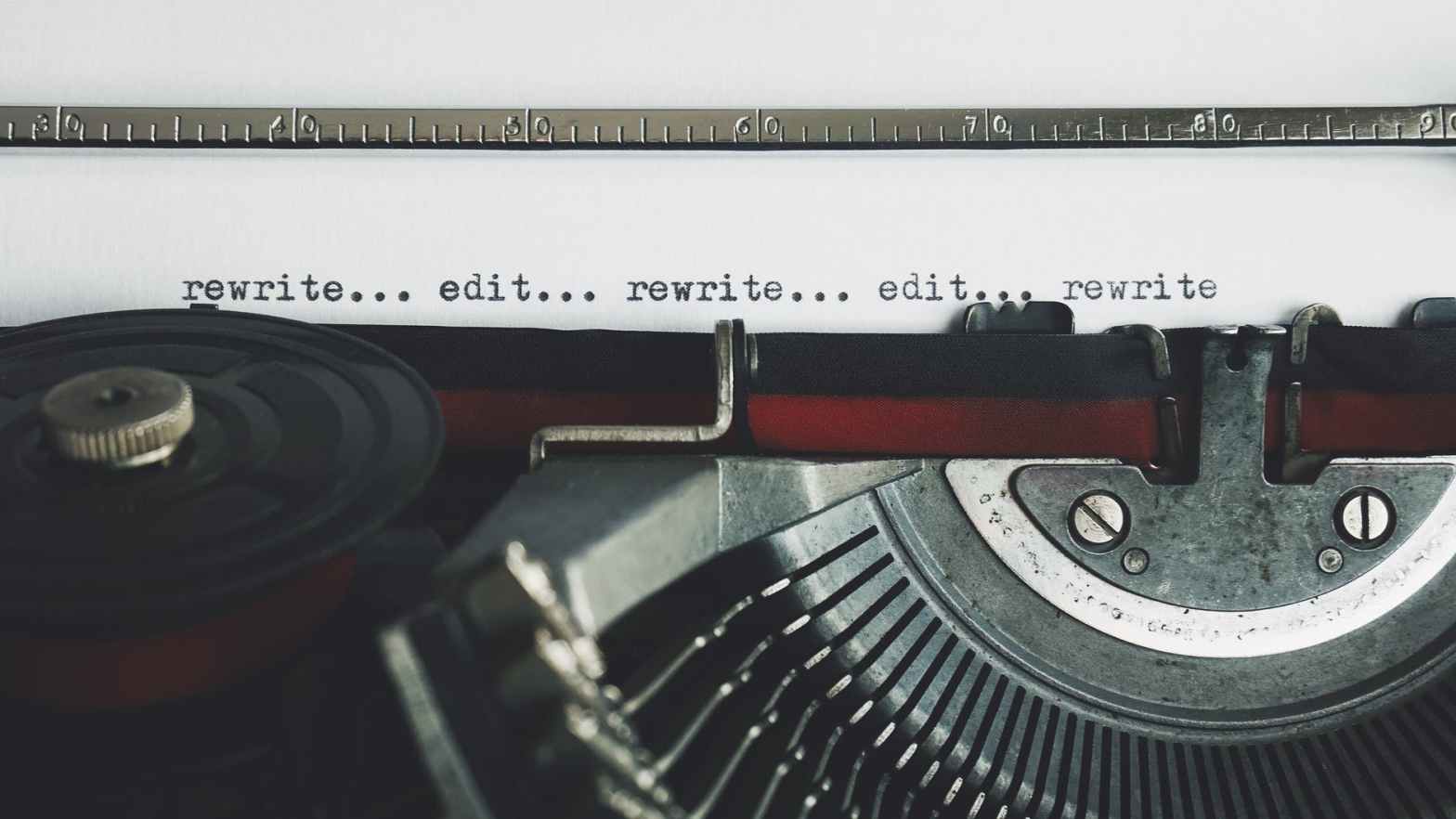
Authors Guide to Self-Editing: The Pros and Cons

Self-editing pertains to the method of examining and evaluating your own written output after finishing its draft. This task is common for authors who opt to self-publish or who want to have clean drafts of their works before handing them over to their publishers. Personally examining your work will let you discover its flaws — such as grammatical errors, typos, spelling mistakes, redundancy, etc. — and correct them before it is too late. The problem with completing the first draft of every literary text is its rawness. There are things that need to be polished and improved. Everything takes time to progress, like fruits and humans, they take a while to ripen and grow. This goes the same way to self-editing, you adjust your focus to see the bigger picture.

In the realm of literature, every great story does not just live to the hearts of the readers because of its underlying message. It creates a massive impact on its audience also because of how it is written. The syntax, grammar, literary devices, and other technical aspects in writing are properly utilized. Therefore, a writer that opt to self-edit must take time to trim his or her work. If there are things that are unnecessary and unsuitable, they must be edited, revised, or even deleted for the greater good. No matter what genre an author decides to write about it can mark on the reader’s hearts as long as the overall aspects of a story is well-seasoned.

There are numerous authors that write about self-editing — like author Collete Jackson Fink in her blog post Self-Editing Fantasy Fiction. Most of them document their self-editing journey, while some lay down tips in self-editing. Although getting a professional editor is a good option, trusting your writing and editing skills has its advantages and disadvantages too. That said, here are the pros and cons of self-editing:

Self-editing Pros

  • Saves money

Authors that prefer to proofread their own work tend to save a lot of financial resources. It is advantageous for these writers because if they are self-publishing or they have been taken under the wing of a publishing company, they can manage their funds better. Money is always essential to every business. It is like the fuel to the fire. There will be no printed books if there is no money invested on it. Although electronic books are trendy, being published is still a dream come true for every author. Thus, self-editing a manuscript or draft is a good way to save resources.

  • Authors will get more creative freedom

The time and effort that an author spend writing is incomparable. The innate talent of playing with words and turning them into a wonderful story is the best asset a writer could take pride. Thus, an author editing his or her own work can evaluate what needs to be added or subtracted for the betterment of the literary work. It is convenient to the end of the writer because he has the creative freedom to summon more creative juices and apply them to the text.

  • Makes authors get more acquainted with their works

Proofreading requires reading and understanding. Examining a written work inside out makes an author get more familiar with it. Although they are the ones who gave meaning and life to the story, there are things that they have accidentally overlooked while writing. In self-editing, an author may meet and discover things — good or bad, in his or her work that needs immediate editing.

  • Gives the opportunity to better the text’s organization

Editing gives you a better view of your work. You will not be left focusing on one corner of the manuscript, instead you will be looking at all corners and edges. This is a chance to improve the overall organization of the text. You can pinpoint and correct the errors in typography, grammar, spelling, subject-verb agreement, and sentence structure. If you are evaluating the primary draft, expect that there will be countless of drafts that will follow. It is because the more you edit the work, the more errors that you will notice. It is a good chance to produce a well-developed and cleaner piece.

  • Provides the chance to edit along the way

There are no expiry period or end of contract in self-editing. You are free to proofread your work as long as you want, making it beneficial for your output. It is because there might be new ideas that will pop in your mind that may be suitable to your literary work; thus, you can add them to your story and improve the plot.

Self-editing Cons

  • Can be time-consuming

You are not disbursing money, what you are spending is effort. Proofreading may extract too much of your time and energy, especially if it is a lengthy draft. The time and effort that you have given to editing can be allocated to other things that can make your day more productive — such as cleaning, exercising, meeting with friends, going out, etc.

  • Authors get awfully familiar with their works

Sometimes too much is toxic. Everything that gets a little too much becomes tiresome to handle. An author editing his or her own work for hours in a day has a tendency to neglect some parts that needs improvement. It is because they get too confident that they already familiarized their work from top to bottom. They get awfully acquainted to their outputs where they, sometimes, put their trust to their instincts and confidence that everything is already put in a package.

  • Prone to procrastination

Polishing and evaluating your own work in the comfort of your house or favorite places everyday can sometimes becomes dreary. Also, it can most likely ignite procrastination because there is no boss to give you deadlines and no schedule to follow. You have the freedom to do the proofreading whenever and wherever you want. So, it is definitely a subject to procrastination. The thought of doing it later — until later becomes tomorrow and tomorrow becomes never, will probably constantly come into mind.

Proofreading your own work for the purpose of improving it before publishing or submitting to your editor may demand too much effort. However, the struggles are nothing compared to the fruits of the labor. It gives pride and acknowledgement that, as a writer, you are not sending a crappy and raw manuscript instead you are handing a publishing-worthy and easier to check draft.

How to Create a Captivating Memoir

A memoir, by definition, is a factual summary of a person’s life that has been put into writing. It originated from the French word “mémoire” meaning “memory.” In contrast to an autobiography, a memoir is a literary piece that focuses only at one or specific part of somebody’s life. It usually narrates a person’s experiences during his or her adolescence, childhood, married life, etc. This type of non-fiction is a tale with complete elements, proper emphasis, and one topic. It also includes the writer’s thoughts and reflection on that particular event of his or her life. What makes this piece compelling to the readers is because of its authenticity and rawness. The emotions and experiences that were laid down are true to life and can also happen to others; thus, it can spark sympathy and understanding from the readers.

It has been already stated that memoirs and autobiographies are two contrasting things. However, just like everything else, they also have some things in common. The former falls into the latter’s category but it is considered as a sub-genre, it is a story taken from a specific moment of someone’s life. The latter, on the other hand, is a story of a person’s life from the beginning to present. The main function of a memoir is to provide an opening for other people to get a glimpse into the experiences, beautiful or painful, of a person.

Writing a memoir is not daunting as it appears to be. It is as easy as having a casual conversation with a friend about some time in your life where you celebrated your birthday in the grandest way. However, the most complicated thing is opening up and letting others have the opportunity to see the vulnerable parts of you. Thus, if you opt to write a memoir, the following are the best steps on how to create one:

  • Narrow Down your Topic

Again, a memoir is just a snapshot of your life. If you compare your life to a book, the memoir is just a chapter. Take for example the memoir “Once Caregiver’s Journey” of Eleanor Gaccetta. The story centers on how the author took care of her mother for 9 and a half years. That is why you must narrow down your choices on what portion of your book you want to share to people. Is it your childhood, first heartbreak, wedding day, or married life? Choose.

  • Adjust your Focus

There are two important things to consider in writing a memoir. First is the moment that you want to put into writing, next are the other ingredients that contributed to the completion of that experience. You must adjust your focus to see the bigger picture. Although you must write about only one topic, you are not restricted to talk about or mention the things related to that moment. For example, you ought to write about your teenage life. You should mention who your friends were, what are the activities that you were fond of doing during that stage of your life, where do you mostly hang out, and what are your reflections on that experience. That said, you can communicate well with your readers by telling them a story with complete details.

  • Speak the Truth

Memoirs fall under the non-fiction category, which means that all parts of it are based on facts. It is important to avoid story fabrication because you might lose the attention and trust of your readers. So, you must always stick to your truth and write with honesty because your intention is to open your walls and share you story. It will lose its purpose if you try to write a piece that is purely fiction or with a touch of fiction.

  • Make Use of your Words

In creating this piece, your medium is your words. They are the primary agents that contribute to the completion of your work. Utilizing them helps you bring and nurture the other elements of your story, such as the setting, characters, plot, point of view, conflict, and theme. Moreover, your words are significant because they add to the absoluteness and beauty of the story. They can ignite the emotions and relay the message of the work to the readers. That is why it is important that you make use of your words and trust them to shape up your story.

  • Paint a Picture

Imagery is essential to every story, fiction or non-fiction. What makes stories and books different and more powerful than films and television shows is its capacity to build up and flash wonderful images to the minds of the readers. Using descriptive words is the best way to create an image in the reader’s mind. Thus, painting a picture and creating images in your memoir help exercise the minds and stir up the imagination of the audience. It can make an interaction between the written work and the reader.

Memoirs are not complicated stories to write. You only need three things: your truth, your words, and your will. These are the factors that lead to the creation of a compelling true to life story. There are no wrong and right in memoir-writing. As long as you keep your story factual and authentic, you can definitely captivate the hearts of the readers.

The Happy Hammock: Introducing Me

Hello, sunshine! Welcome to my blog, where we aim to spread positivity and happiness everywhere. My name is Honey and I write about food, books, entertainment, updates on gadget, current events, sports, and anything chill in this busy world.

Living in this century where everything is all about hustling and bustling, I chose to focus on the things that bring me happiness rather than those that drain all will and motivation in my body. But, do not get me wrong. I am not one of those people branded as “happy-go-lucky” because I also think about how I can incorporate find happiness in doing practical things to shape up my future.

I was raised in a household where time is given too much value. All things, big or small, should be done on or before time. We did not know procrastination and we are not allowed to know it. Procrastination is considered a stranger in our home that we are not permitted to associate ourselves with. Being in a constant rush and always feeling the pressure of having to complete every assignment all at once ignited an emotion inside me that I’ve never met before. It is like being in love for the first time, when you feel butterflies in your stomach seeing the one you love. But there were no butterflies to me, only disappointments and punches in my gut, especially when I fail to meet the demands of each task. The rush made me robotic and a time-ticking bomb, anytime and anywhere I can explode.

It was a continuous battle of my eagerness to slower my pace and the urge to go faster and beat deadlines. What became my lifeline during these unbearable times was writing. I began to write my hatred on the way I was raised and the home that I grew up. All the what ifs and what could have beens that have bugged my mind for so long were put into words. And with that, I have found both a safe haven and a silver lining. I found freedom and ease. My world started to revolve around writing about the things that interests me, like food, gadgets, literature, and more. I can still remember my first written piece. It is called “In Food, I Trust.” Then a lot followed, most of them are about food and the rest are about my other interests.

Discovering my love and skill in writing made me look at the brighter side of life. I have learned to embrace all the good and ugly things life throws at me. Before, I hated everything associated with schedules and deadlines. But now that I have already met the all disappointment and negativity, I started seeing positivity in failure and pain. As of the moment, my mantra is “trust the process.” And I plan to continue living by those words no matter how strong the flow and current of life and time.

According to Walt Disney, “I always like to look on the optimistic side of life, but I am realistic enough to know that life is a complex matter.” That said, whatever good or bad experiences that I went through, and will go through, those are part of the complexity of life. There is no ratio nor statistics that shows how much beautiful or ugly things that happen to one’s life. All that is present is the will to face, conquer, find happiness, and live in the moment in our lowest of lows and highest of highs.

Design a site like this with WordPress.com
Get started